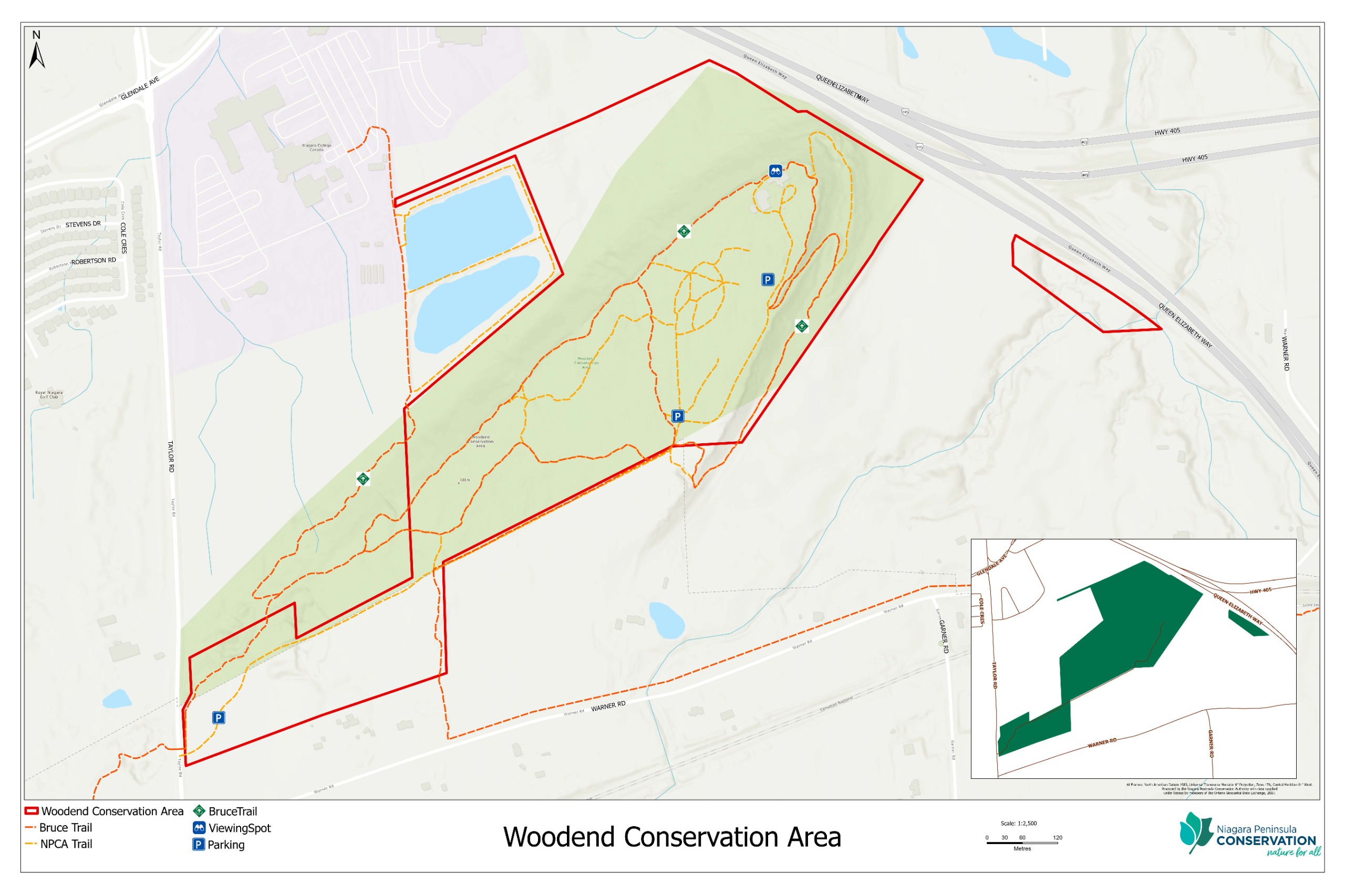
Located in the Town of Niagara-on-the-Lake, Woodend was acquired by NPCA in 1974 for natural and cultural heritage protection. Woodend is 48.4 hectares in size and offers scenic views of the Niagara Escarpment and surrounding Carolinian forest.
The conservation area is popular for hiking, with visitors appreciating
the access to the Bruce Trail and NPCA trails for nature observation, scenic
views, and exploring its ecological and cultural heritage. Trails at Woodend have
significant history, they include sections dating back to Indigenous Trail
Networks, a lookout during the War of 1812, and part of the Laura Secord Legacy
Trail.
Woodend is a unique education hub, home to students
participating in outdoor education programs daily during the school year at the
Walker Living
Campus and having Niagara College’s Daniel J. Patterson Campus as a
neighbouring property where the escarpment base and surrounding area is used
for outdoor learning opportunities. The NPCA currently has a long-standing Memorandum
of Understanding with the District School Board of Niagara for the use of the
Walker Living Campus building and sections of the conservation area that will need
special consideration during the management planning process. A key focus will
be on supporting and enhancing safe and accessible learning opportunities and
transportation for students and the broader community.
The development of the updated management plan for Woodend Conservation Area is guided by NPCA’s Conservation Areas Strategy, with a strong focus on collaboration and community engagement.
Throughout the planning process, we are committed to working closely with community partners and members to ensure that the vision and objectives of the plan reflect the current priorities, environmental pressures, protection of unique natural heritage, and needs of the community.
This approach will shape the plan’s direction and ensure that decisions made are informed by diverse perspectives.
Due to the sensitive environment of the escarpment, the updated management plan will include natural heritage enhancements, biodiversity protection, and will guide capital investments to improve visitor experience and long-term sustainability of the conservation area.
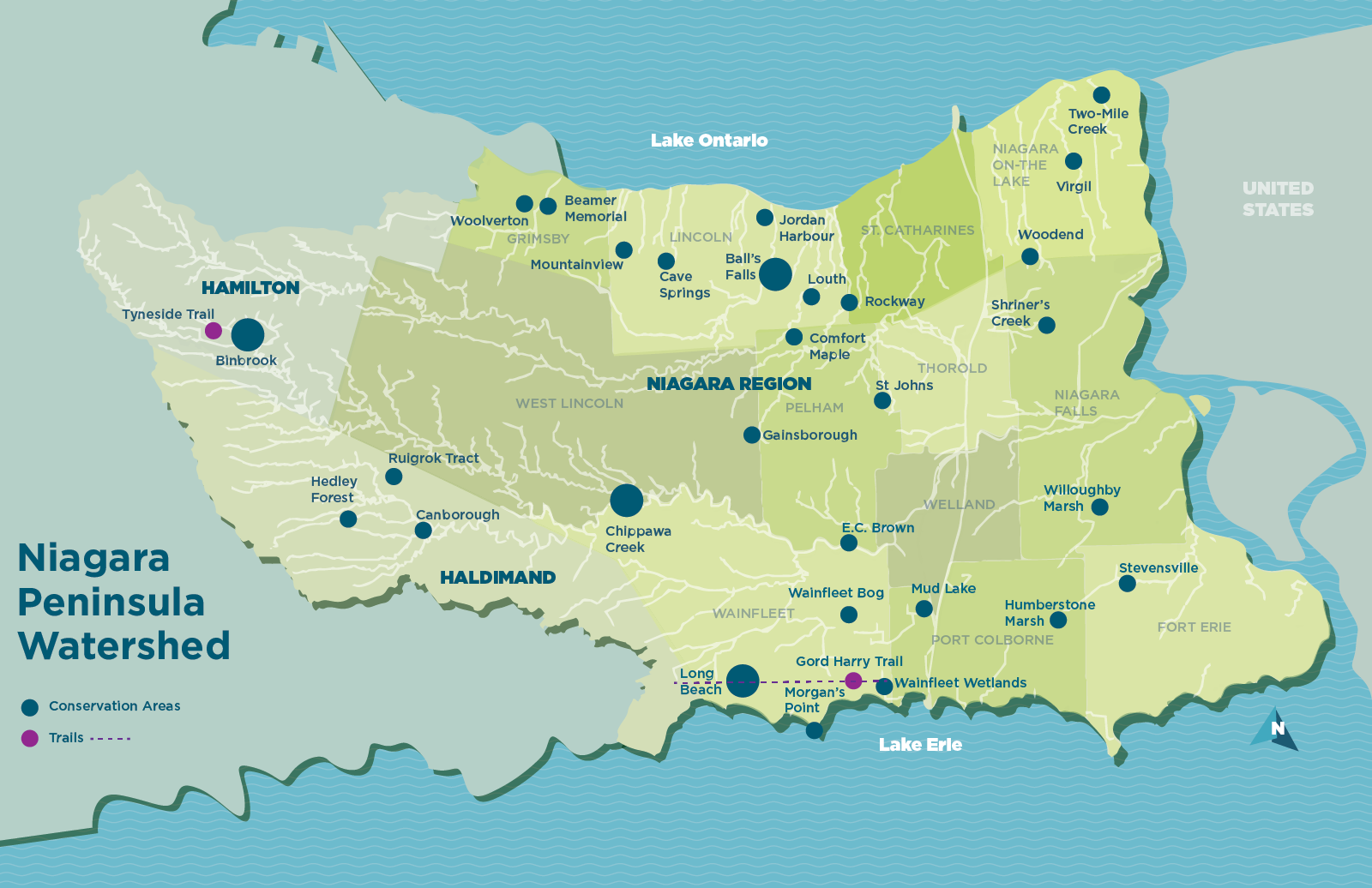
The Niagara Peninsula Conservation Authority (NPCA) is a community-based natural resource management agency that protects, enhances, and sustains healthy watersheds. With 65 years of experience, the NPCA offers watershed programs and services that focus on flood and hazard management, source water protection, species protection, ecosystem restoration, community stewardship, and land management. The NPCA is one of 36 Conservation Authorities in the Province of Ontario and manages 43 Conservation Areas within the Niagara Peninsula watershed held in public trust for recreation, heritage preservation, conservation, and education. The map below highlights the location of many conservation areas that are open to the public.
A watershed is the land that drains into a particular watercourse such as a stream, river, lake. Gravity and the land’s topography (the high and low areas) move water, rain, and snowmelt across the landscape from one area to another.
The Niagara Peninsula Conservation Authority’s watershed area encompasses 2,424 km2, including the entire regional municipality of Niagara, portions of the City of Hamilton (21%), and Haldimand County (25%). Since time immemorial, this area has been the home to Indigenous peoples – a place for sharing, trading, hunting, gathering, stewardship, and friendship. Currently, the watershed supports a population of approximately 520,000 people.
The Niagara Peninsula watershed is a natural treasure of distinct cultural, geological, hydrological, and biological aspects not found elsewhere in North America. It is part of the Carolinian life zone – the most biodiverse and threatened ecoregion in Canada. The Niagara Peninsula watershed boasts approximately 30% natural cover that provides critical habitat such as forested woodlots, slough forests, alvars, and coastal wetlands that support rich biodiversity, including rare plants and animals.
The watershed is uniquely situated between two Great Lakes, with the Niagara River as a boundary shared with the United States of America. As a result, the watershed area includes several notable natural features such as the Niagara Escarpment Biosphere Reserve, the Niagara Falls, Wainfleet Bog, Ball’s Falls, Willoughby Marsh, and other significant landforms such as the Fonthill Kame ice contact-delta complex. The unique microclimate created by the Niagara Escarpment and rich soils supports one of Ontario’s most productive agriculture systems, including vineyards, tender fruit orchards, livestock, and various specialty crops (greenhouses for flowers, vegetables, sod farms, and mushroom farms).
These important watershed features provide life-sustaining benefits for all and many opportunities to discover nature and culture.
Map of Woodend Conservation Area